




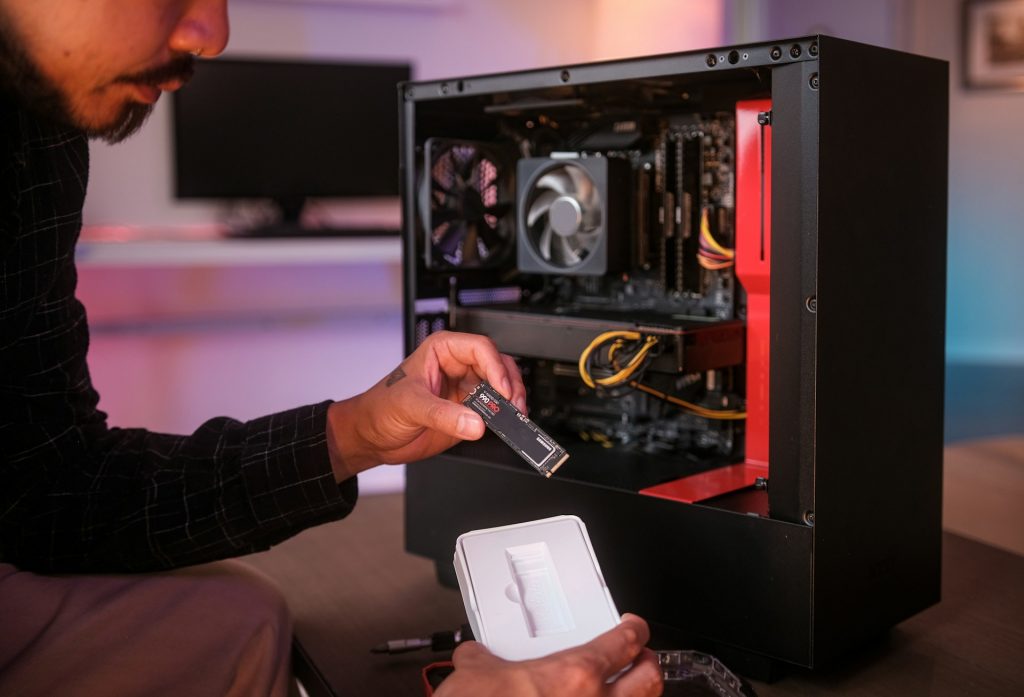
SanDisk Corporation (NASDAQ:SNDK) shares rallied sharply in Friday trading following a blockbuster earnings report that shattered Wall Street expectations. The storage giant delivered a one-two punch of strong second-quarter results and third-quarter guidance that came in significantly above analyst estimates, signaling that the company’s strategic pivot toward artificial intelligence infrastructure is paying off faster than anticipated.
Financial Performance and the AI Catalyst
After the market closed Thursday, SanDisk reported adjusted earnings per share of $6.20, effectively doubling the consensus estimate of $3.12. Revenue was equally impressive, coming in at $3.02 billion against expectations of $2.59 billion. Management pointed to a specific driver for this outperformance: a voracious appetite for AI-capable storage. Datacenter revenue leaped 64% sequentially, a surge attributed to rapid adoption among AI infrastructure builders and technology companies deploying generative AI at scale.
This performance underscores a broader shift in the market narrative often described by analysts as “AI Round Two.” While the initial phase of the AI boom focused heavily on the backbone—chips and raw data center construction—the focus is widening to the storage and specialized infrastructure required to maintain these systems. SanDisk’s results suggest the company has successfully embedded itself at the forefront of this wave, capitalizing on the hardware demands of everything from autonomous cybersecurity to drug discovery platforms. CEO David Goeckeler noted that the company’s structural reset has aligned supply with this sustained demand, positioning SanDisk for disciplined growth and industry-leading financial metrics.
Guidance Stuns Wall Street
If the second-quarter numbers were strong, the outlook for the third quarter was nothing short of explosive. SanDisk issued guidance for adjusted earnings per share between $12.00 and $14.00, a range that dwarfs the consensus estimate of just $3.63. Revenue projections were similarly bullish, with the company forecasting between $4.40 billion and $4.80 billion, compared to the $2.62 billion analysts had penciled in.
Management attributed this optimistic outlook to an improved product mix and accelerating deployments of enterprise SSDs. As global technology platforms continue to recognize the critical role high-performance storage plays in powering AI, market demand dynamics are strengthening, allowing SanDisk to command better pricing and volume.
Consumer Rebrand: The Shift to Optimus
While the enterprise sector drives the stock rally, SanDisk is simultaneously executing a major overhaul of its consumer facing product lines. The company is phasing out the Western Digital-inherited branding in favor of a new moniker: “Optimus.” Following the initial announcement in January regarding the retirement of the WD_BLACK and WD Blue names, the first “Optimus” units are now hitting retail channels, including Amazon.
The rebranding effort appears to be more than just a marketing concept; it is a full commercial rollout. The initial flagship is the Optimus GX Pro 8100, positioned as the direct successor to the popular WD Black SN8100. From a technical standpoint, the hardware remains largely unchanged. Early specifications indicate that performance and features mirror the previous generation, suggesting the transition is primarily cosmetic and structural rather than a leap in engineering capabilities. Consequently, the market is watching closely to see how quickly the legacy WD models disappear from shelves.
Pricing Disparities and Market Reality
The arrival of the Optimus line has introduced a significant price premium, a common occurrence during product launches but one that is particularly stark in this case. In European markets, where the rollout is visible, the 1TB Optimus model is listed around €347, while the 2TB variant commands €689. By contrast, the predecessor WD Black SN8100 drives are available for significantly less, starting at €197 for 1TB and €366 for 2TB.
Retailers often bake in higher margins for new inventory, and early adopters typically pay a “launch tax” before supply and demand equilibrium settles prices. However, the current disparity is steep. Part of this price pressure stems from limited availability; only a handful of vendors are currently stocking the Optimus drives, whereas the legacy WD Black models are widely available across dozens of shops. Industry observers believe the official pricing for the new line has been set structurally higher to account for the rebranding costs and new design, rather than technical innovation. This leaves consumers with a clear choice: pay extra for the new name or snap up the discounted, yet technically identical, WD Black and Blue models while they last.
Future Roadmap and Legacy Support
The GX Pro 8100 is merely the vanguard of a broader refresh. SanDisk plans to roll out the Optimus GX 7100 and Optimus 5100 to replace the WD Black SN7100 and WD Blue SN5100, respectively, extending the rebrand across multiple performance tiers.
For current owners and prospective buyers of the outgoing lines, the transition should be seamless. Western Digital-branded drives will continue to be sold alongside the new inventory until stocks are depleted. Crucially, warranty and support services for the legacy drives will remain active, offering peace of mind to value-conscious buyers who opt for the older branding to save money. Even SanDisk’s official Amazon storefront continues to list the WD models, confirming that the sunsetting of the old brand will be a gradual process rather than an abrupt halt.


More Stories
BBVA Revises Synergy Expectations in Sabadell Acquisition Deal
CISO Global Inc.: A Cybersecurity Firm Navigating a Competitive Market
Sony Expects Strong Growth in PlayStation 5 Game Sales Next Year